AI-Powered Cyberattacks Are Moving From Theory to Reality
An AI-assisted attack on an EU institution shows why organisations need to combine faster detection with stronger identity, segmentation and recovery controls.
AI-powered cyberattacks are no longer just a scenario for security conferences. A recent incident involving a European Union institution shows how artificial intelligence can help attackers identify weaknesses and accelerate operations against complex digital environments.
According to AP News reporting, an official confirmed that a cyberattack using artificial intelligence had targeted a key EU institution. Some digital tools remained offline while security teams investigated and responded. The incident is important because it illustrates a shift in the economics of cybercrime: the attacker does not need to automate every decision to gain an advantage. Speeding up reconnaissance and vulnerability discovery may be enough. For AI-powered cyberattacks, a clear process helps teams make better decisions and avoid preventable mistakes.
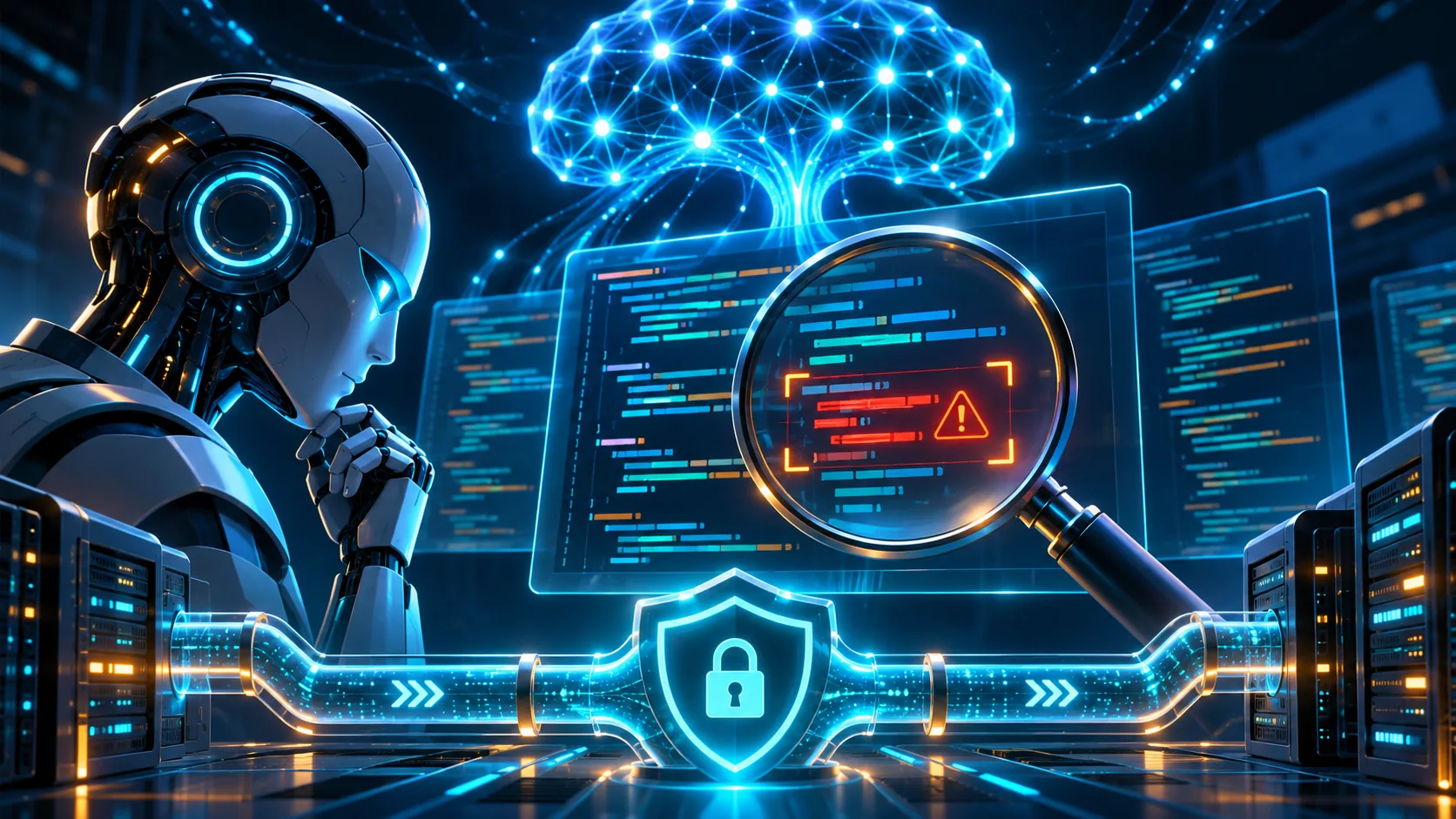
Understanding AI-powered cyberattacks: What makes an AI-assisted attack different?
Traditional attacks often depend on a mixture of automated tools and human expertise. AI can connect those pieces more quickly. It can help classify exposed services, compare software behaviour, generate test variations and prioritise the systems most likely to produce a result.
That does not mean every attack becomes autonomous or unstoppable. Human operators still choose targets, maintain access and decide how to monetise or exploit the result. The practical change is that a smaller team may be able to examine more potential entry points in less time.
The business risks extend beyond the first breach
The first concern is direct compromise: stolen credentials, altered data, unavailable services or unauthorised access to internal systems. The second is operational disruption. When a public institution loses translation, reimbursement or workforce-management tools, the incident affects staff and citizens even when the attacker does not destroy the underlying data.
The third risk is concentration. A business may have strong controls around its main website but still depend on a cloud identity provider, a third-party API, an outdated plugin or a supplier with weaker security. AI-assisted reconnaissance makes those connected systems more attractive because they can provide a cheaper route into the wider operation.

Four controls businesses should strengthen now
1. Treat identity as a primary security boundary
Use phishing-resistant authentication where possible, remove dormant accounts, review privileged access and monitor unusual sign-in behaviour. Strong identity controls reduce the value of credentials that attackers discover during reconnaissance.
2. Segment critical systems
Separate customer-facing services, administration, backups and sensitive business systems. Segmentation does not prevent every intrusion, but it can limit how far an incident travels.
3. Patch according to exposure and business impact
Security teams should prioritise internet-facing systems, remote access services and components with known exploitation paths. A complete inventory is essential because an organisation cannot patch what it does not know it operates.
4. Rehearse recovery
Detection is only half of resilience. Test whether the business can restore critical services, communicate with customers and operate manually when a key platform is unavailable. Recovery plans should include third-party failure and stolen administrator credentials.

AETRIXA’s view
The lesson is not that businesses should panic about artificial intelligence. It is that security programmes must become faster, more observable and more deliberate. Organisations that combine identity controls, segmentation, patch discipline and tested recovery will be better positioned as AI gives both defenders and attackers more leverage.
Source note: This original AETRIXA analysis responds to AP News reporting on the AI-assisted attack against an EU institution. It is independently written and does not reproduce the source.
Related AETRIXA analysis
- Google Gemini’s AI Shopping Push: From Product Discovery to Checkout
- AI-Driven Cyberattacks Are Here: What Businesses Should Do Before They’re Next
Practical next steps
For teams following AI-powered cyberattacks, the useful response is to turn the development into a repeatable business decision. Document the current position, confirm who owns the next action, set a review date and record the evidence used to make the decision. This keeps the response practical for business leaders as well as specialists. It also makes future changes easier to measure, because the organization can compare the original baseline with later results. A clear checklist, responsible owner and measurable outcome reduce the risk of reacting to news without changing the underlying process.