
AI Agent Payments: 8 Guardrails for AWS Marketplace Workflows
AI agent payments are moving into cloud marketplaces. Learn eight guardrails for identity, budgets, approvals, auditability and safer autonomous purchasing.
AI agent payments are becoming an operating model
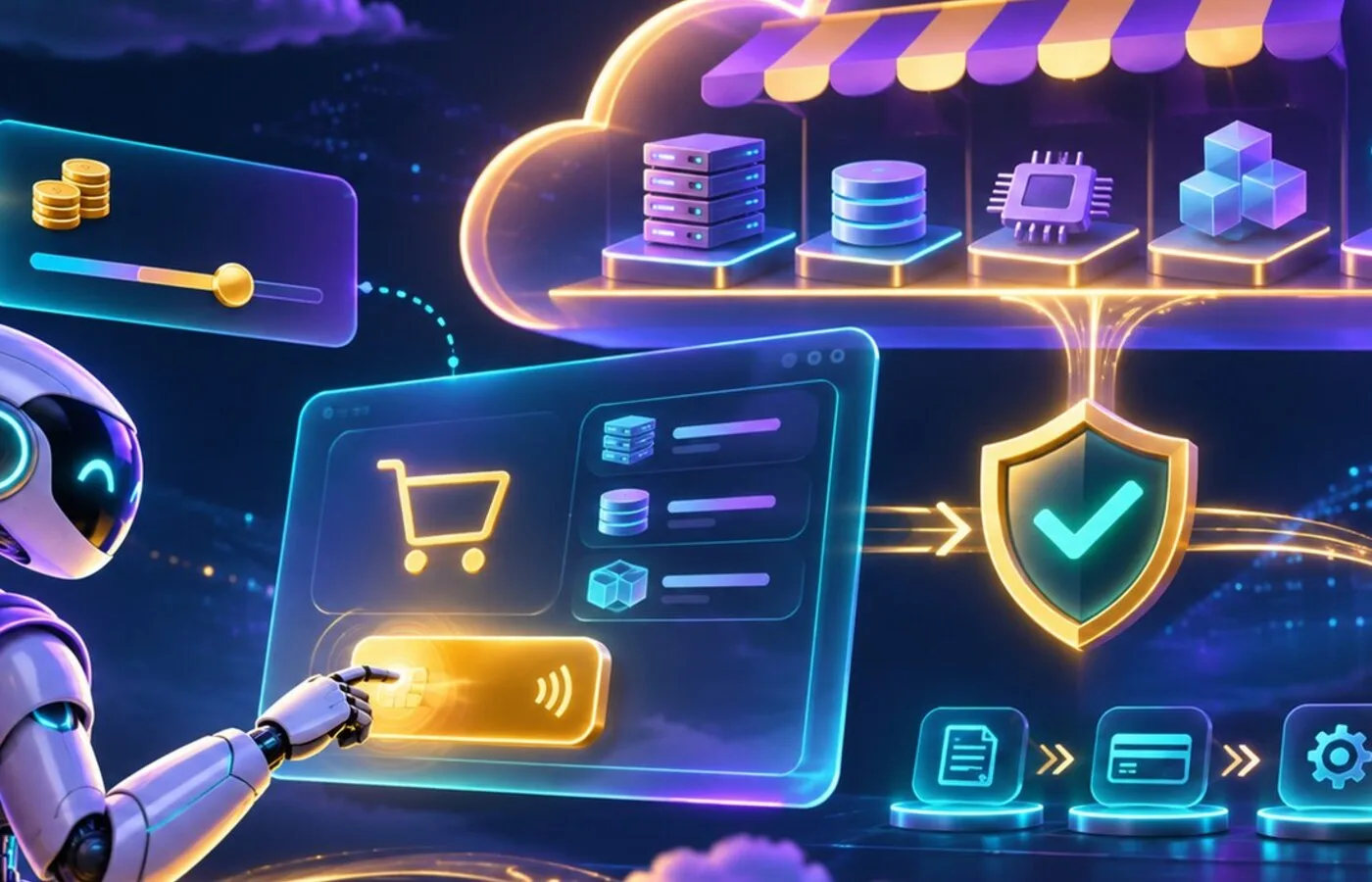
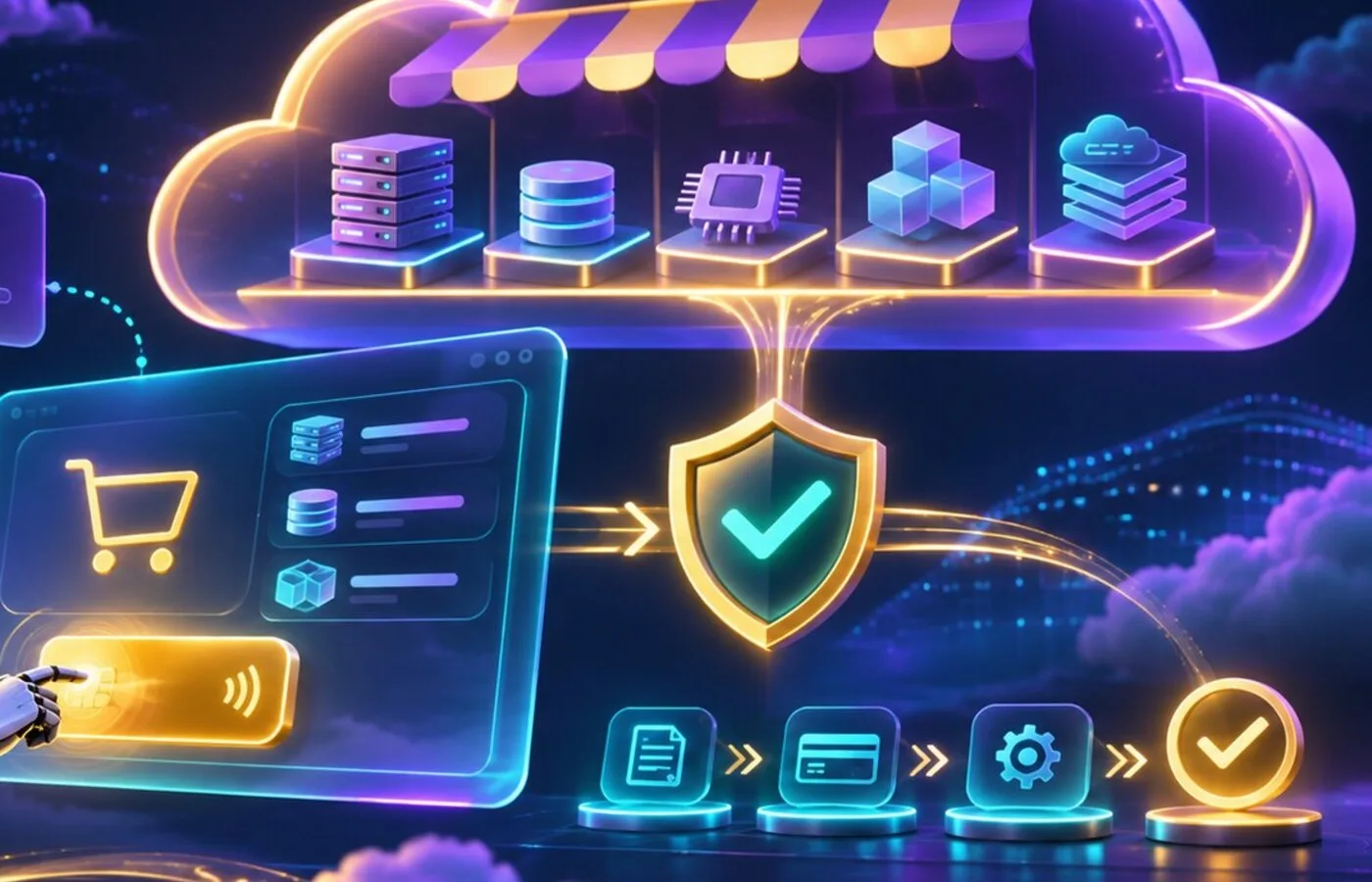
AI agent payments are moving from experiments into controlled business workflows. AWS has announced agentic payment capabilities for AWS Marketplace through Amazon Bedrock AgentCore Payments, giving software agents a way to discover, authorize and pay for products within defined controls.
The key question is not whether an agent can click buy. It is whether the organisation can prove who authorized the purchase, what the agent was allowed to do, how much it could spend and how the transaction can be reversed.

Eight guardrails for safer purchasing
1. Verifiable identity
Use distinct workload identity for each agent, environment and function. Shared keys make attribution and revocation difficult.
2. Narrow purchasing scope
Allow-list vendors, products, regions, currencies and contract terms. Discovery permission is not purchase permission.
3. Layered budgets
Combine per-transaction, daily, monthly and project budgets with velocity limits.
4. Separate discovery from approval
Let an agent compare products and prepare a recommendation, while requiring approval for new vendors, regulated data and material spend.
5. Authenticate intent
Bind approval to product, price, buyer, purpose and expiry time. Generic approval tokens should not be reusable.
6. Observe tool calls
Record prompts, tool calls, policy decisions, payment attempts and outcomes with correlation IDs. Keep sensitive payment data out of general logs.
7. Plan failure and reversal
Define what happens when a provider times out, a payment duplicates or a product is withdrawn. Use bounded retries and escalation.
8. Review the agent like a financial operator
Monitor drift, exceptions, unused permissions and unusual purchases. Re-certify access when models, tools or owners change.
Where to start
Choose one low-risk workflow such as an approved SaaS renewal. Establish a small budget, test failure modes and require human approval until the audit trail is complete.
Why payment autonomy needs governance
AI agent payments introduce a new separation of duties. An agent may discover an item, compare options, prepare a recommendation and call a payment tool, but those steps do not have to be controlled by the same permission. Separating them gives finance and procurement teams a way to approve the business decision without allowing an agent to expand its own authority.
The transaction record should explain the complete chain: which agent acted, which human or policy approved it, what product and price were presented, which budget applied, what data was exchanged and whether the provider confirmed the result. Without that evidence, an apparently successful workflow can become difficult to reconcile or dispute.
Use idempotency and expiry by default
Payment systems must assume that networks fail. A timeout does not prove that a purchase failed, and an agent should not blindly submit the same request again. Use idempotency keys, bounded retries and a reconciliation step that checks the provider before creating a second transaction. Approval should also expire when the price, vendor, currency or contract terms change.
Budget controls should be layered. A small per-transaction limit may still allow unacceptable cumulative spend if an agent can repeat the action thousands of times. Combine transaction, daily, project and vendor limits with velocity monitoring. Alerts should reach someone who can pause the workflow, not only a dashboard that nobody watches.
Roll out in stages
Start with a low-risk workflow using an allow-listed product set and a small budget. Require human approval for every purchase and compare the agent’s recommendation with the final transaction. Once the audit trail and reversal process are proven, expand the scope gradually. Keep regulated data, new vendors and material commitments behind stronger approval gates.
Questions for the implementation team
Can the organisation revoke one agent without taking down every workflow? Can finance identify the owner of an unexpected purchase? Can security distinguish a prompt-injection attempt from a normal request? Can procurement explain the rule that allowed a vendor? Answering these questions before launch turns an impressive demonstration into a controlled business capability. Our related AI automation analysis covers the wider governance challenge.
Final takeaway: AI agent payments can shorten procurement cycles, but autonomy must be paired with identity, policy, budgets and evidence.
Sources: AWS Marketplace agentic payments; AWS technical overview. Read our AI automation analysis.