AI Cybersecurity Tools Can Find Vulnerabilities Faster—but Humans Still Matter
AI is beginning to accelerate vulnerability discovery. The opportunity is substantial, but businesses still need human review, responsible disclosure and disciplined patching.
AI cybersecurity: Cybersecurity teams have spent years warning that artificial intelligence could make attacks faster. The same technology is now being used to find weaknesses before criminals exploit them. This guide focuses on AI cybersecurity and the practical actions businesses can take next.
Recent reporting described an AI model helping identify a serious vulnerability in widely used software, while broader AI-assisted research uncovered large numbers of potential issues in major open-source projects. The development is encouraging, but it also creates a difficult operational question: how can organisations use AI for security without confusing speed with certainty? For AI cybersecurity, a clear process helps teams make better decisions and avoid preventable mistakes.

Understanding AI cybersecurity: Why AI is useful for vulnerability research
Modern software is too large for a human team to inspect line by line. AI tools can search patterns, compare code paths, identify unusual behaviour and suggest where a weakness may exist. They can also help researchers reproduce a problem and draft a possible fix.
This makes security work more accessible to smaller teams. A company that cannot maintain a large research department may still be able to use AI-assisted scanning to focus limited expert time on the most important risks.

Why discovery is not the same as proof
An AI system can produce false positives, misunderstand a dependency or suggest a fix that creates a different problem. A potential vulnerability must be validated in a safe environment, assessed for real-world impact and handled through responsible disclosure.
Businesses should also remember that an automated scan is not a complete security programme. It does not replace asset inventory, patch management, access control, secure development practices or incident response.
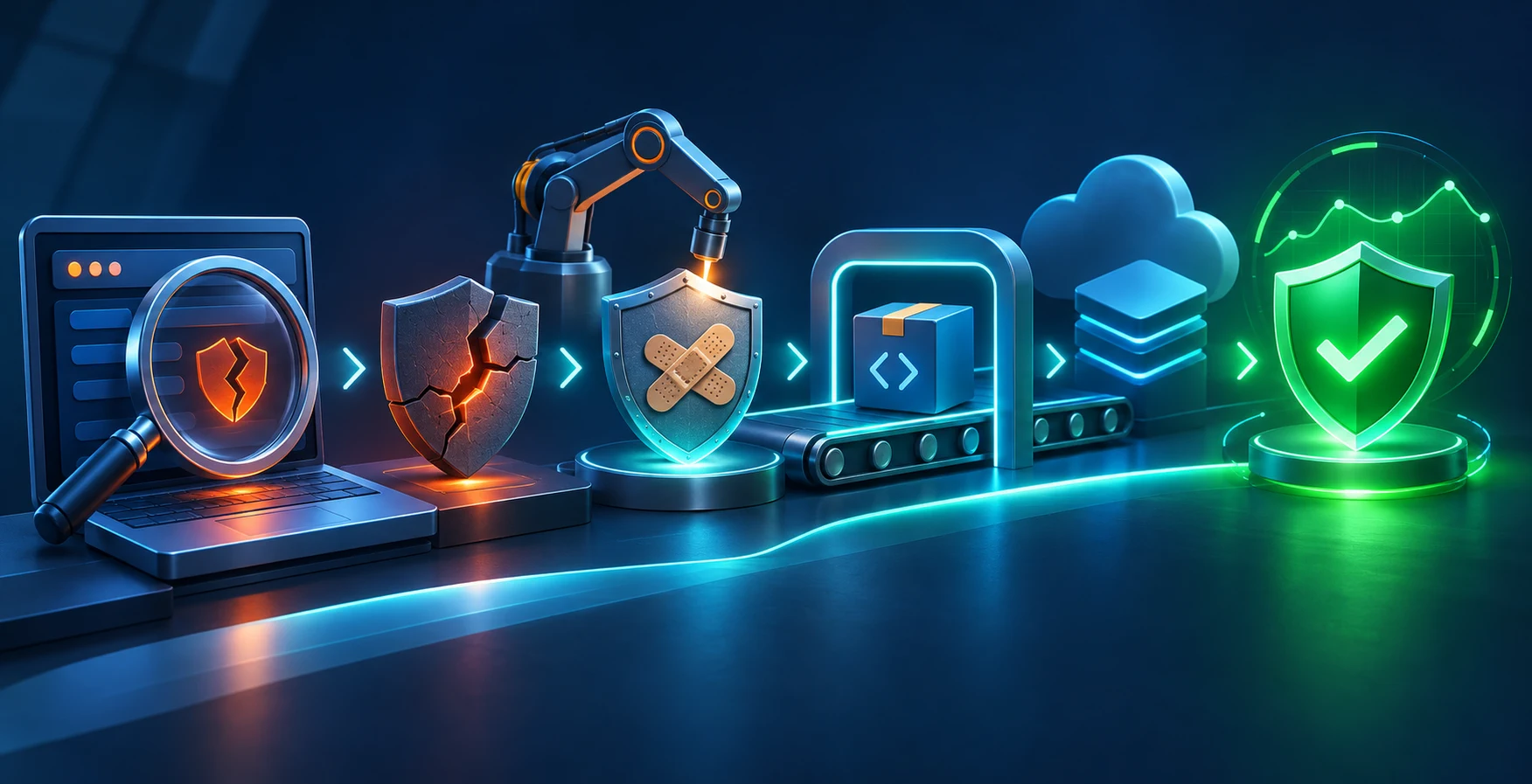
A practical AI-assisted security workflow
Start with known assets
Use AI against code, applications and infrastructure that your organisation is authorised to assess. Maintain a current inventory so the system is scanning real business exposure instead of an outdated copy.
Separate discovery from deployment
Run experiments in isolated environments. Do not allow an AI tool to modify production code, systems or access permissions without human review and an auditable approval process.
Prioritise by business impact
Not every finding deserves the same response. Rank issues by exploitability, exposure, data sensitivity and the operational damage a compromise could cause. A theoretical issue in an isolated test tool is different from an unauthenticated flaw in a customer-facing system.
Keep a human in the loop
Security engineers should review findings, validate fixes and decide when disclosure or emergency patching is required. Human judgement remains essential because security is a business-risk decision, not only a pattern-matching exercise.
Measure remediation, not just discovery
The number of vulnerabilities found is an interesting metric, but the useful measure is how quickly confirmed risks are fixed and verified. A smaller list of well-understood, remediated issues is healthier than a large queue nobody can manage.
What this means for smaller businesses
AI-assisted security does not mean every company needs to buy the most expensive tool. It means businesses should ask whether their current provider can identify weaknesses continuously, explain findings clearly and support safe remediation.
AETRIXA’s view
The best use of AI in cybersecurity is not blind automation. It is focused acceleration: let machines search broadly, let specialists validate deeply and let leadership understand the business consequences. That balance turns AI from a novelty into a practical security capability.
Source note: This original AETRIXA analysis responds to TechCrunch reporting on AI-assisted vulnerability discovery and new cybersecurity models. The article is independently written and does not reproduce the source.
Related AETRIXA analysis
- CrowdStrike Zscaler Acquisition: 5 Cybersecurity Risks and Benefits
- AI Optimization: 4 Lessons from Amazon’s Decart Deal
Practical next steps
For teams following AI cybersecurity, the useful response is to turn the development into a repeatable business decision. Document the current position, confirm who owns the next action, set a review date and record the evidence used to make the decision. This keeps the response practical for business leaders as well as specialists. It also makes future changes easier to measure, because the organization can compare the original baseline with later results. A clear checklist, responsible owner and measurable outcome reduce the risk of reacting to news without changing the underlying process.