Website design and website development are often treated as the same service, but they solve different problems. Design shapes how a website looks, feels, and guides people. Development turns that experience into a working, responsive, secure, and maintainable system. The strongest websites bring both disciplines together from the beginning.
What website design actually covers
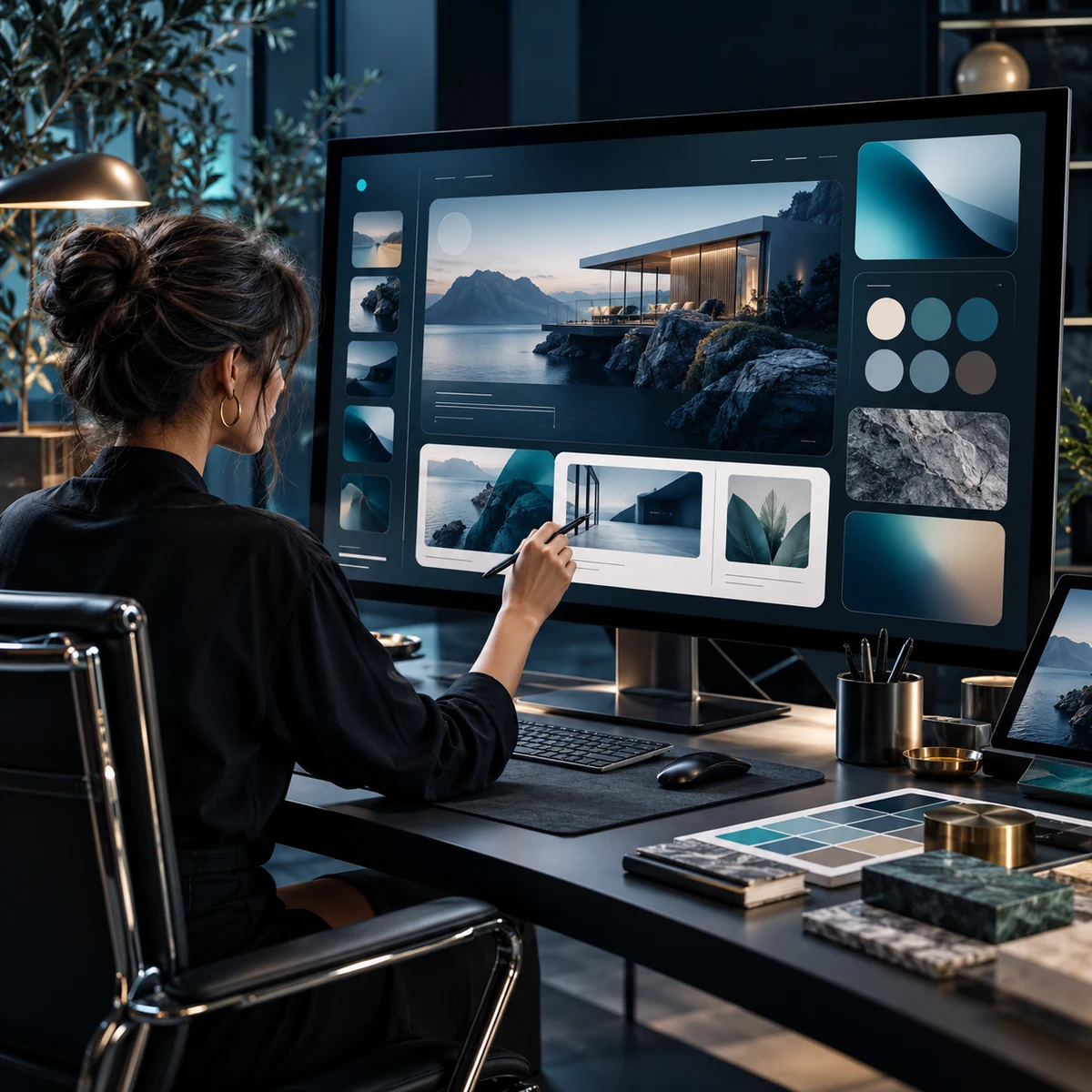
Website design is not only the choice of colours, fonts, and images. It includes the structure of the experience: how information is grouped, how visitors move from one page to another, what the interface communicates, and what action each page is designed to support.
A thoughtful designer considers brand identity, hierarchy, accessibility, mobile behaviour, content length, trust signals, and conversion friction. Good design makes the right information easy to find and makes the business feel credible before a visitor ever speaks to someone.
What website development actually covers
Development is the technical work that makes the design function. It includes building templates, components, forms, animations, content systems, integrations, responsive behaviour, and connections to tools such as analytics, payment providers, CRMs, or booking systems.
A good developer also thinks about performance, security, maintainability, and future updates. A beautiful interface that loads slowly, breaks on mobile, or is impossible for the team to edit is not a successful website.
Why design and development must collaborate
If design happens without technical input, a concept may be attractive but difficult or expensive to build. If development happens without design thinking, the result may function but feel generic, confusing, or disconnected from the brand.
Collaboration helps the team make realistic decisions early. The designer can understand the technical system, the developer can protect the intended experience, and the client can see how the proposed website will work in real situations rather than only in a static mock-up.
Where content and SEO fit in
Content sits between design and development. It influences page length, headings, calls to action, imagery, and the information architecture. Search engine optimisation also influences how pages are grouped and how people discover them.
A website should be easy for people to understand and easy for search engines to crawl. That means clear headings, useful copy, descriptive links, good performance, accessible media, and a logical relationship between important pages. AETRIXA combines web design and development with SEO considerations so the finished website is more than a visual shell.
Which service does your business need?
If your existing website works technically but looks dated or makes the customer journey difficult, you may need a design-led redesign. If it looks good but has broken forms, slow loading, poor mobile behaviour, or difficult editing, development and performance work may be the priority.
Many businesses need both. A new design without a stable technical foundation will not last, while a technical rebuild without a clear experience can simply reproduce the same problems in a newer framework. Start with the business outcome, then choose the right blend of design and development.

A complete website project should consider
- Brand and visual direction
- Information architecture and page structure
- Responsive layouts across devices
- Content, headings, and conversion journeys
- Development, integrations, and editing workflows
- Performance, security, accessibility, and SEO
Frequently asked questions
Can one person do both website design and development?
Sometimes, especially for smaller projects. Larger or more complex websites benefit from specialists who can give design, content, technical, and performance decisions the attention they need.
Should design come before development?
The overall design direction should be established before development, but the two disciplines should collaborate throughout the project. Early technical feedback prevents unrealistic concepts and late rework.
Is website design or development more important?
Neither works well alone. Design creates clarity and trust; development delivers reliability and functionality. The value comes from how they work together.
Final thoughts
The difference between website design and development is useful because it shows why a successful website needs more than attractive screens or functional code. Design gives the experience direction, development gives it strength, and content and SEO connect it to real people and real business goals.
See how AETRIXA approaches web design and development.
A practical website design vs development action plan
The most useful way to approach website design vs development is to connect the work to a real customer and business outcome. A checklist can provide structure, but the decisions behind it should reflect your offer, resources, audience, and stage of growth. When the work is tied to a clear outcome, it becomes easier to prioritize improvements and explain the investment to the wider team.
Start with the decision that matters most
Begin by deciding how you will judge progress. Your goal may be more qualified enquiries, a clearer buying journey, stronger organic visibility, lower support demand, or a website that your team can update confidently. Write that goal in plain language before choosing a tool, platform, layout, or supplier.
For this project, focus on these practical actions: Define the user journey and content structure before visual styling; Test the design against real content, devices, and accessibility needs; Confirm that the build can maintain the intended experience after launch. Each step removes a different kind of uncertainty and creates evidence for the next decision.
Avoid attractive but expensive distractions
One of the most common mistakes is treating design as decoration and development as a late technical handoff. A professional result does not come from adding more features by default. It comes from choosing the right level of complexity, documenting assumptions, and protecting the parts of the experience that customers rely on.
Use a simple review scorecard
Before approving the next stage, check a shared brief that connects the visual system to content, performance, accessibility, and maintainability. Ask what has been tested, what remains uncertain, who owns the decision, and how the result will be measured after launch. This creates a more useful conversation than asking whether everyone simply likes the latest version.
- Does the page or system make the next customer action clear?
- Can the team maintain the result without unnecessary friction?
- Has the experience been tested on the devices and scenarios that matter?
- Is there a measurable reason for every major requirement?
Further reading and next steps
Keep building your fundamentals with the W3C accessibility introduction. Then return to your own website and identify one improvement that can be tested this month. Consistent, evidence-led progress is usually more valuable than a large change that no one can evaluate properly.
website design vs website development: a practical decision checklist
Use website design vs website development as a working theme for the improvements that matter most to customers. The phrase is useful because it connects the technical or strategic work to a clear business outcome rather than treating SEO as a separate task.
When reviewing this page, ask whether the recommendation is specific, measurable, and realistic for the team responsible for delivery. Then choose one improvement, record the baseline, and review the result after implementation.
A clear focus on website design vs website development helps the page stay useful, keeps the next action visible, and gives future updates a consistent direction.